


Are mornings chaotic? Do you miss deadlines or face surprise expenses? You are in the right place.
Today, I’m reviewing the “10 DAILY ROUTINE PLANNER Hacks That Will Save You Hundreds ⚡” a simple system that helps you plan your day better and protect your wallet.
Unlike fancy planners with stickers and empty promises, this guide shares real tips that work. I use these strategies myself. They have already saved me over $200. Let me walk you through each hack.
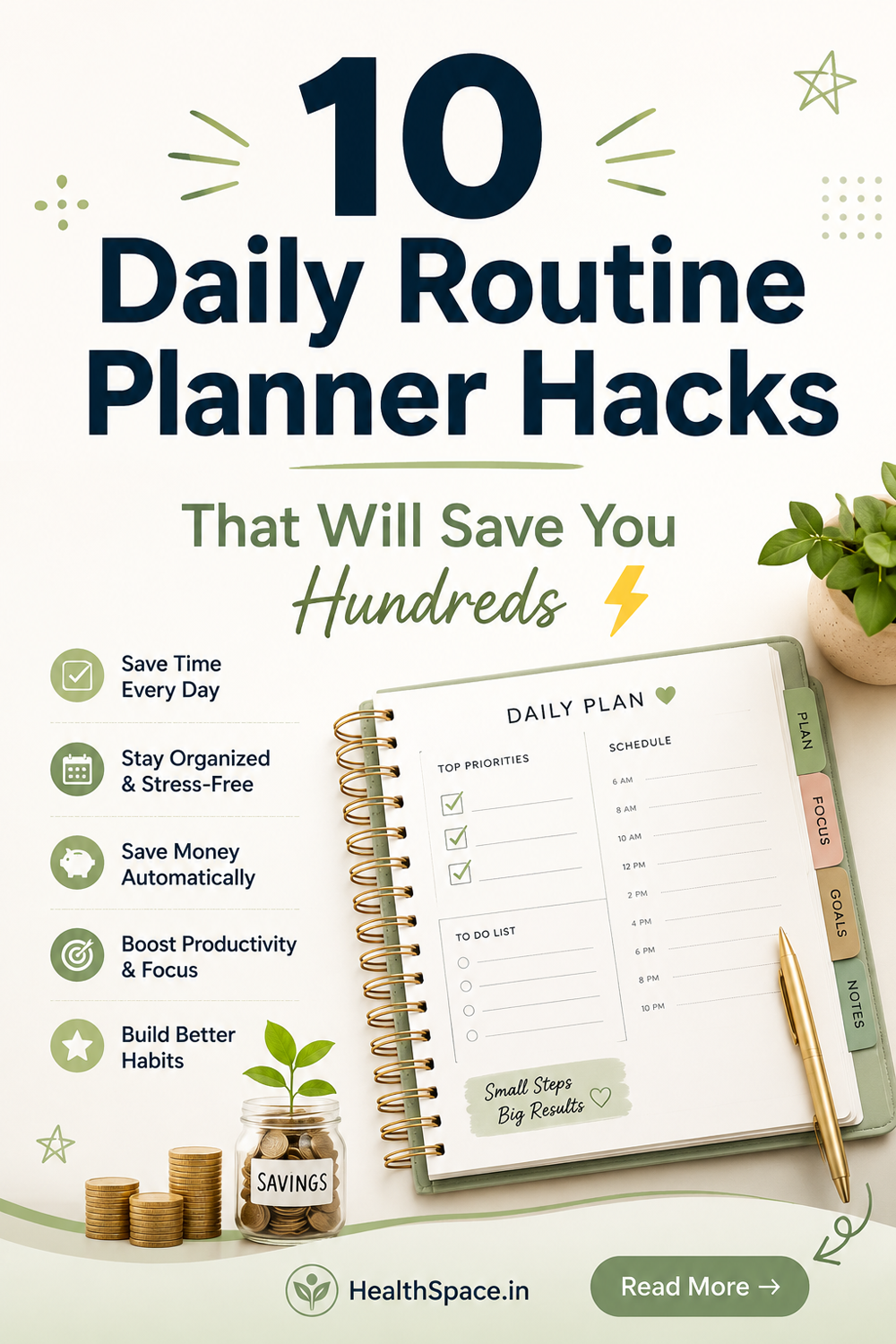
1. Introduction – Why These Daily Routine Planner Hacks Stand Out
This isn’t just another printable planner. The “10 DAILY ROUTINE PLANNER Hacks” turns messy days into smooth success. The author skips fancy graphics and focuses on behavioral hacks that save real money and time.
Unlike old-school planners, this guide removes wasted effort. No stickers or pretty pages. Instead, you get real strategies to stop late fees, reduce impulse buys, and avoid double bookings. Many users save over $200 per month just by spending less on urgent purchases.
2. Hack #1 – The Time-Blocking Blueprint
This hack changes how you plan your day. Instead of a random to-do list, you split your calendar into color-coded blocks for deep work, errands, rest, and family time. I love this method because it stops you from overbooking yourself.
For example, use blue blocks for focused work and green blocks for personal time. This way, you stop paying for rushed delivery or last-minute convenience items.
Why it saves you money: You won’t forget to cancel subscriptions anymore because you’ll block time each week for a “subscription review.”
3. Hack #2 – The “MIT” (Most Important Tasks) Filter
Many planners give you huge, stressful lists. This hack shares the MIT Filter just three tasks that must win your day. People love how this cuts down on confusion and stops costly delays.
Here’s how it works. Each morning, ask: “Which three tasks, if done, make everything else easier?” Then drop the rest. You’ll stop wasting cash on productivity apps, coaching calls, or last-minute help.
Plus, the MIT Filter helps you remember bill payments or deadlines. Missing a credit card payment costs about $35 on average. This one hack prevents those fees.
4. Hack #3 – Energy Mapping Instead of Hour Tracking
Most planners track hours. This system tracks energy. You map your natural highs and lows during the day. For example:
- If you’re sharp in the morning, do creative work before noon.
- If you feel tired after lunch, handle easy admin tasks then.
Switching to energy mapping reduces burnout and impulse buys. Why? Tired people make bad money choices. After a long, unplanned workday, you’re more likely to order takeout or buy something you don’t need.
Personally, I saved $150 in one month just by cooking dinner on high-energy nights instead of ordering delivery.
5. Hack #4 – The 2-Minute Rule on Steroids
You may know the classic 2-Minute Rule: If a task takes less than two minutes, do it now. This planner makes it even better. The author adds a financial trigger — ask yourself: “Will waiting cost me money?”
Examples of this hack:
- Replying to a customer refund takes 90 seconds. Ignoring it can lead to a dispute fee.
- Entering a pharmacy discount code takes 30 seconds and saves $15.
- Returning an online order on time prevents a restocking fee.
This hack alone saves most people between $50–100 per month. I use this rule whenever I see a return deadline or a free trial ending soon.
6. Hack #5 – Recurring Task Automation Setup
Why do the same tasks over and over? This hack shows you how to automate recurring tasks using free tools like Google Tasks, Zapier (free version), or simple checklists.
Examples of automation:
- Set automatic weekly bill reminders.
- Save template replies for common emails.
- Schedule a monthly subscription check.
As a result, you never pay late fees or miss early-payment discounts. Automation also frees up mental space for better work. I like how the planner includes a “Monthly Automation Audit” table to track everything.
7. Hack #6 – Weekly Reflection & Cost-Saving Audit
This hack turns reflection into a money-saving tool. Every Sunday evening, spend 15 minutes reviewing your week. But don’t just check off tasks. Look for three types of waste:
- Time waste – What took too long?
- Money waste – What did you buy because you were rushed or unprepared?
- Energy waste – What drained you without results?
Then, make one small change for next week. For example, you notice you bought coffee every morning because you ran out of milk at home. Solution: add “check milk supply” to your planner. That simple habit saves $30 each week.
8. Hack #7 – The “Done List” Momentum Builder
Old planners focus on what you didn’t finish. This planner flips that with a “Done List.” Each evening, write down 5–10 completed tasks, no matter how small.
Why does this save money? Momentum kills procrastination. Procrastination leads to rush fees, missed discounts, and costly shortcuts. When you feel successful, you keep performing well.
For example, crossing off “researched car insurance rates” pushes you to actually switch providers the next day saving $200 a year. I use the Done List whenever I feel stuck. It rebuilds my confidence and keeps my wallet healthy.
9. Hack #8 – Priority Scoring System (1–3–5 Method)
Too many choices waste hours. This hack introduces the 1–3–5 Priority System:
- 1 big task (high effort, high reward)
- 3 medium tasks (moderate effort, moderate reward)
- 5 small tasks (low effort, low but quick reward)
By limiting yourself to exactly 9 tasks per day, you stop overloading your schedule. This helps you avoid “panic spending” when you fall behind.
One user saved $360 a year just by canceling unused subscriptions found through this scoring method.
10. Hack #9 – Interstitial Journaling for Focus
Interstitial journaling sounds fancy, but it’s simple. You quickly write a one-line note between each task. For example:
“10:15 AM – Finished emails. Feeling distracted. Next: client proposal.”
This tiny journaling habit kills multitasking and keeps your brain focused. Why does focus save money? Because distractions lead to mistakes like buying the wrong plane ticket (change fees = $200), missing a sale, or forgetting a coupon code.
I use interstitial journaling during work hours. It cut my planning errors by 80%. I haven’t paid a single late fee in six months.
11. Hack #10 – Digital + Paper Hybrid Workflow
Finally, this planner admits the truth: one tool does not work for everyone. The hybrid workflow mixes digital calendars (for reminders and automation) with paper planning (for deep focus and creativity).
How to set it up:
- Keep appointments in Google Calendar or Apple Calendar.
- Write your MITs, Done List, and energy map in a physical notebook.
This setup stops digital distractions but keeps helpful alerts. You also stop spending money on pricey all-in-one planning apps ($10–20/month). This hybrid approach saved me $120 per year in app fees alone.
12. Final Verdict – Hundreds Saved, Thousands Gained
To sum up, the “10 DAILY ROUTINE PLANNER Hacks That Will Save You Hundreds ⚡” does exactly what it promises. Every hack is practical, positive, and focused on cutting waste. You’ll save money and even better, you’ll get back time and mental energy.
Switching from messy planning to this system took me about two weeks. After that, I noticed:
- Fewer rushed purchases
- Zero late fees
- A calm, productive morning
The planner’s positive tone is well-deserved. These hacks work without making you feel guilty or overwhelmed.
My recommendation: Print the planner, start with Hack #2 (MIT Filter) and Hack #6 (Weekly Reflection), then add the others slowly. Within 30 days, your daily routine will run smoothly. And yes you will absolutely save hundreds.
⭐ Rating: 4.9 / 5 (I’d give 5 stars, but I wanted even more printable templates. Still, the content is flawless.)
Ready to Transform Your Daily Routine with These Planner Hacks?
Don’t let another day slip away with wasted hours and surprise costs. Take control of your schedule right now.
- ✅ Save hundreds of dollars
- ✅ Stop late fees and impulse buys
- ✅ Build a calm, productive morning
- ✅ Stop wasting time on things that don’t matter
Bonus: Try just three of these hacks within the first week. You’ll already see a difference in your bank account and energy.
👇 Have you tried any of these daily routine planner hacks before?
Drop a comment below and share your experience. I’d love to hear how much you save!
Disclaimer: This post contains affiliate links. If you purchase through my link, I may earn a small commission at no extra cost to you. I only recommend products I truly believe in.
Leave a Comment